Our Achieve

Our Achieve

Microbial fertilizer Organic Fertilizer USA > Blog

Build Stronger Roots. Improve Nutrient Efficiency. Increase Yield Naturally. Modern corn production demands more than simply applying fertilizer. Today’s growers face rising fertilizer costs, unpredictable weather, declining soil health, and increasing pressure to produce higher yields while using fewer resources. At MicrobeBio®, we believe the future of corn production starts beneath the soil surface. Our integrated […]

Read more

A MicrobeBio® Farmer Q&A Guide to Maximizing Nutrient Efficiency Proper fertilizer application is just as important as choosing the right fertilizer. Even the highest-quality fertilizer can underperform if it is applied incorrectly. The right application method increases nutrient availability, reduces waste, protects the environment, and helps crops reach their full genetic potential. At MicrobeBio®, we believe […]

Read more

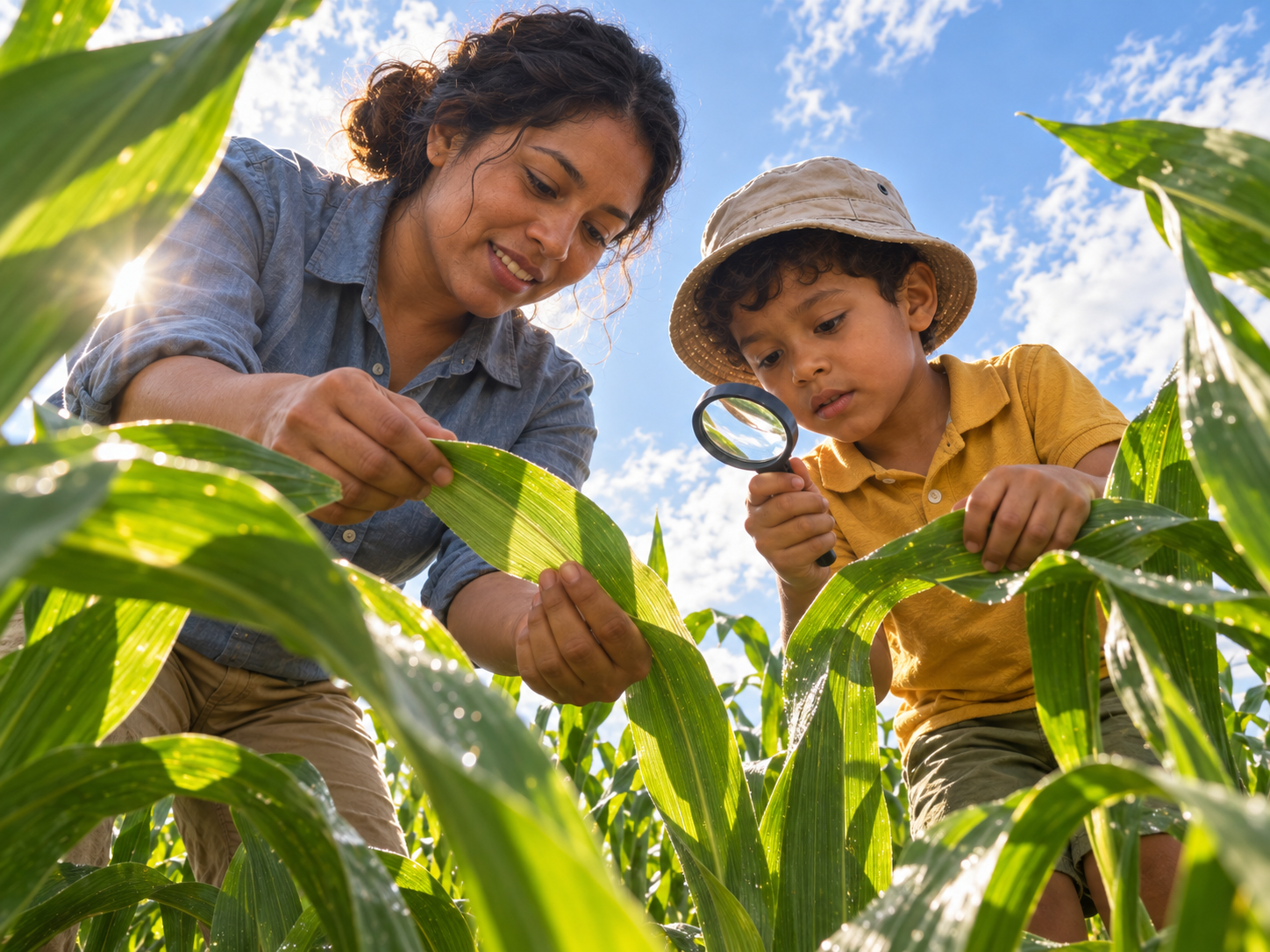
Understanding Nutrient Deficiencies in Corn: How to Identify Symptoms and Restore Plant Health Healthy corn plants require a balanced supply of essential nutrients throughout every stage of growth. When one or more nutrients become unavailable due to poor soil fertility, improper pH, drought, waterlogging, compaction, or root damage, the plant begins showing characteristic deficiency symptoms […]

Read more

How Biological Agriculture Is Transforming Modern Farming with MicrobeBio® As agriculture enters one of the most important transitions in history, farmers around the world face the same challenge: How do we produce more food while using fewer chemical inputs, protecting natural resources, and improving profitability? Rising fertilizer prices, declining soil fertility, unpredictable weather, water shortages, […]

Read more

How Nature’s 500-Year Process Is Inspiring the Next Generation of Biosolutions For thousands of years, healthy soil has quietly sustained civilization. It feeds our crops, stores our water, regulates our climate, and supports nearly every ecosystem on Earth. Yet the rich topsoil that modern agriculture depends upon can require hundreds of years to naturally develop. […]

Read more

Billions of years of innovation. Advancing biology to build a healthier, more sustainable world. Long before modern agriculture, biology was already transforming the Earth. For billions of years, microorganisms, beneficial fungi, enzymes, and other living biological systems have built fertile soils, recycled nutrients, purified water, supported healthy plants and animals, and maintained the natural balance […]

Read more

One Integrated Biological System. Every Stage of Growth. Every Part of the Plant. Modern agriculture is entering a new biological era where maximum crop performance is achieved by optimizing the entire plant-soil ecosystem rather than managing individual agronomic inputs independently. Sustainable productivity depends on the continuous interaction between soil microorganisms, nutrient cycling, root architecture, plant […]

Read more

How MicrobeBio® Green Hazmat OR™ 1.0–9.0 Is Redefining Environmental Restoration Through Biotechnology One Biotechnology Platform. One Mission. Restoring Oil. Water. Soil. Ecosystems. Agriculture. Communities. Every day, the world produces more than 100 million barrels of oil to power transportation, generate electricity, manufacture essential products, and support modern economies. Petroleum remains one of humanity’s most important […]

Read more

Siderophore Role in Biocontrol: Iron Starvation as a Natural Disease Suppression Strategy Siderophores play a powerful role in biocontrol (biological control of plant pathogens) by enabling beneficial microbes to outcompete harmful ones for a critical resource: iron (Fe). This mechanism is especially valuable in sustainable agriculture as an eco-friendly alternative or complement to chemical pesticides. […]

Read more

Fungal Siderophore Chemistry: High-Affinity Iron Chelation for Bioweathering and Nutrient Acquisition Siderophores (from Greek: “iron carriers”) are small, water-soluble, low-molecular-weight compounds (<1,000 Da) produced by bacteria, fungi, and some plants under iron-limiting conditions. They bind Fe³⁺ with extremely high affinity (stability constants often log K = 20–52), solubilizing otherwise insoluble iron from minerals and making […]

Read more
Translate »