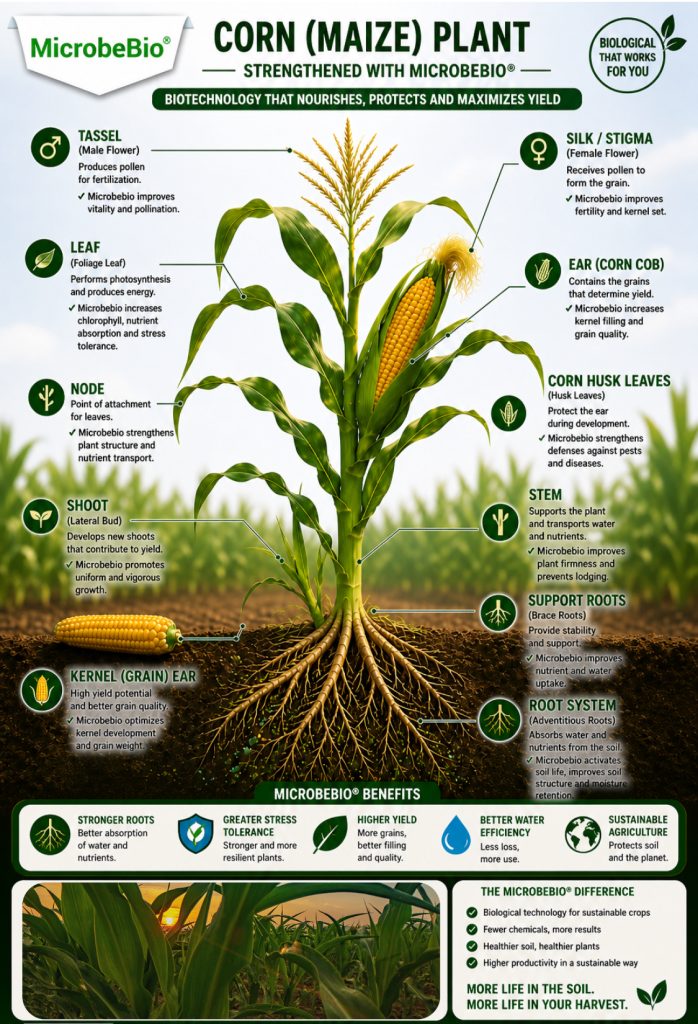
A Practical System for Higher Yield, Stronger Plants, and Sustainable Farming
Maize is not just a crop—it’s a living biological system. Every stage of growth comes with different vulnerabilities, and pests are always looking for the weakest point to attack.
Most farmers react after damage happens.
Microbebio® takes a different approach:
- Build plant strength early
- Protect continuously at every stage
- Use biology to outcompete pests naturally
This is how you turn pest control into yield protection and performance optimization.
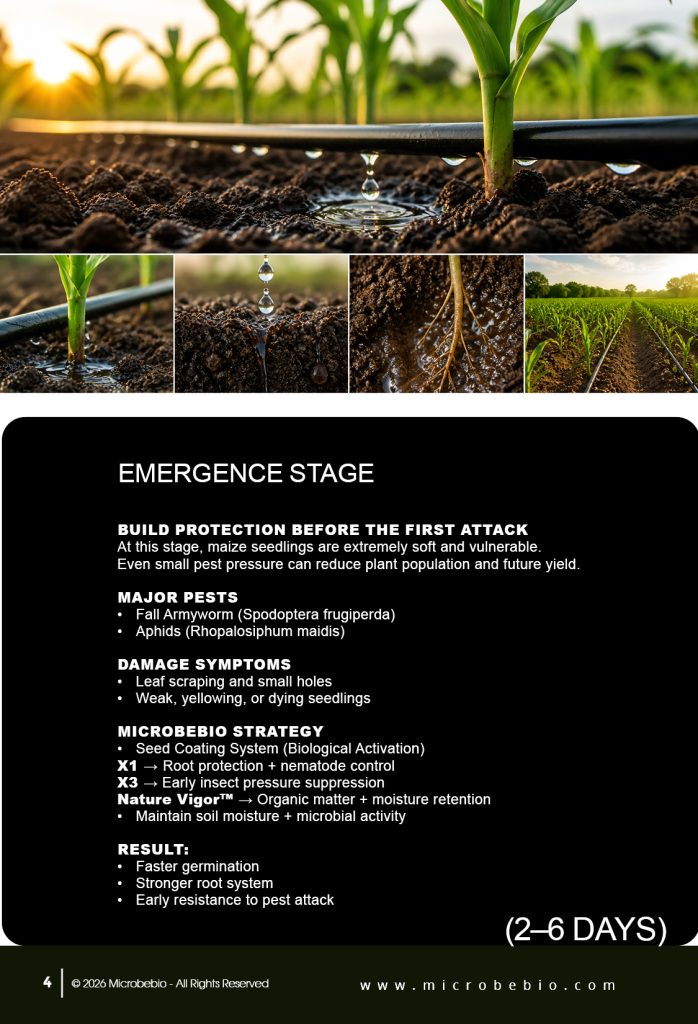
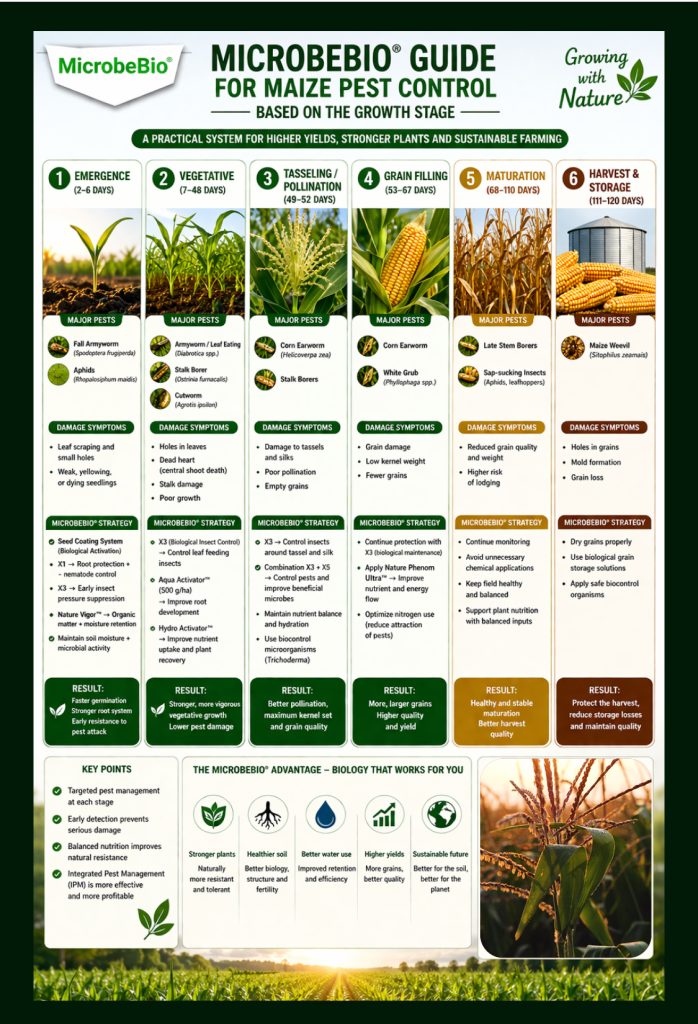
EMERGENCE STAGE (2–6 DAYS)
Build Protection Before the First Attack
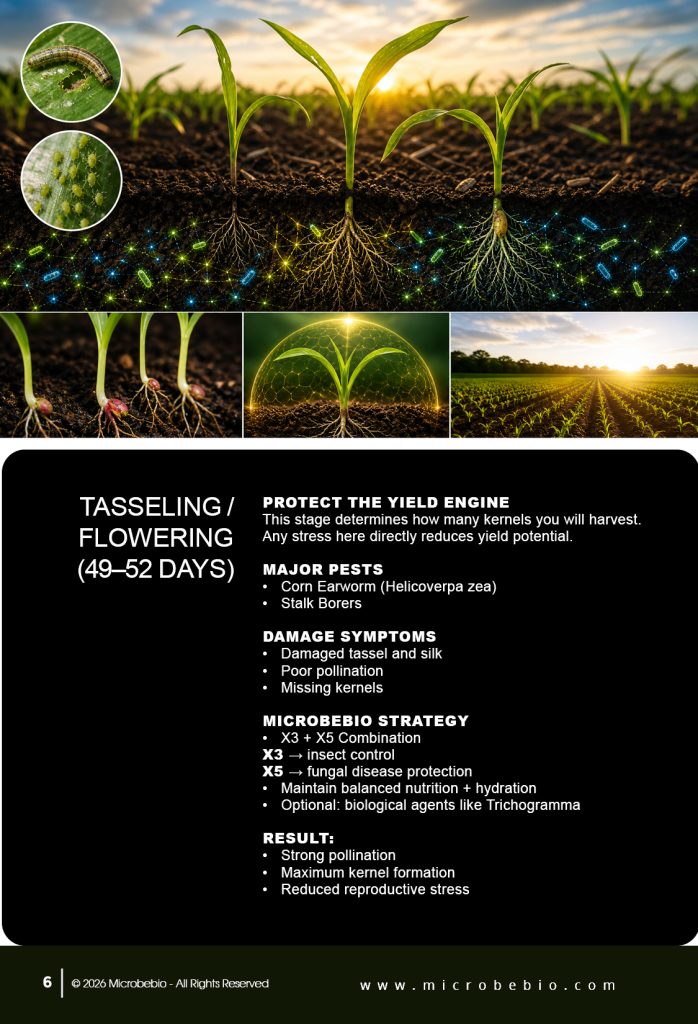
At this stage, maize seedlings are extremely soft and vulnerable.
Even small pest pressure can reduce plant population and future yield.
Major Pests
- Fall Armyworm (Spodoptera frugiperda)
- Aphids (Rhopalosiphum maidis)
Damage Symptoms
- Leaf scraping and small holes
- Weak, yellowing, or dying seedlings
Microbebio Strategy
Seed Coating System (Biological Activation)
- X1 → Root protection + nematode control
- X3 → Early insect pressure suppression
- Nature Vigor™ → Organic matter + moisture retention
Maintain soil moisture + microbial activity
Result:
- Faster germination
- Stronger root system
- Early resistance to pest attack
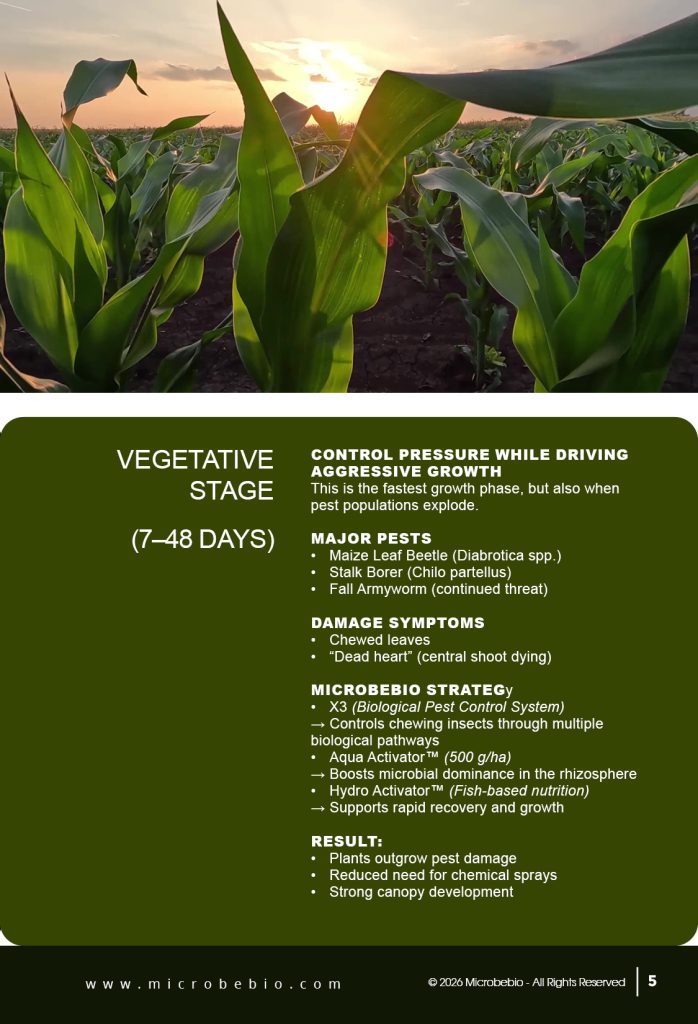
VEGETATIVE STAGE (7–48 DAYS)
Control Pressure While Driving Aggressive Growth
This is the fastest growth phase, but also when pest populations explode.
Major Pests
- Maize Leaf Beetle (Diabrotica spp.)
- Stalk Borer (Chilo partellus)
- Fall Armyworm (continued threat)
Damage Symptoms
- Chewed leaves
- “Dead heart” (central shoot dying)
Microbebio Strategy
X3 (Biological Pest Control System)
→ Controls chewing insects through multiple biological pathways
Aqua Activator™ (500 g/ha)
→ Boosts microbial dominance in the rhizosphere
Hydro Activator™ (Fish-based nutrition)
→ Supports rapid recovery and growth
Result:
- Plants outgrow pest damage
- Reduced need for chemical sprays
- Strong canopy development
TASSELING / FLOWERING (49–52 DAYS)
Protect the Yield Engine
This stage determines how many kernels you will harvest.
Any stress here directly reduces yield potential.
Major Pests
- Corn Earworm (Helicoverpa zea)
- Stalk Borers
Damage Symptoms
- Damaged tassel and silk
- Poor pollination
- Missing kernels
Microbebio Strategy
X3 + X5 Combination
- X3 → insect control
- X5 → fungal disease protection
Maintain balanced nutrition + hydration
Optional: biological agents like Trichogramma
Result:
- Strong pollination
- Maximum kernel formation
- Reduced reproductive stress
GRAIN FILLING STAGE (53–67 DAYS)
Protect Kernel Development and Quality
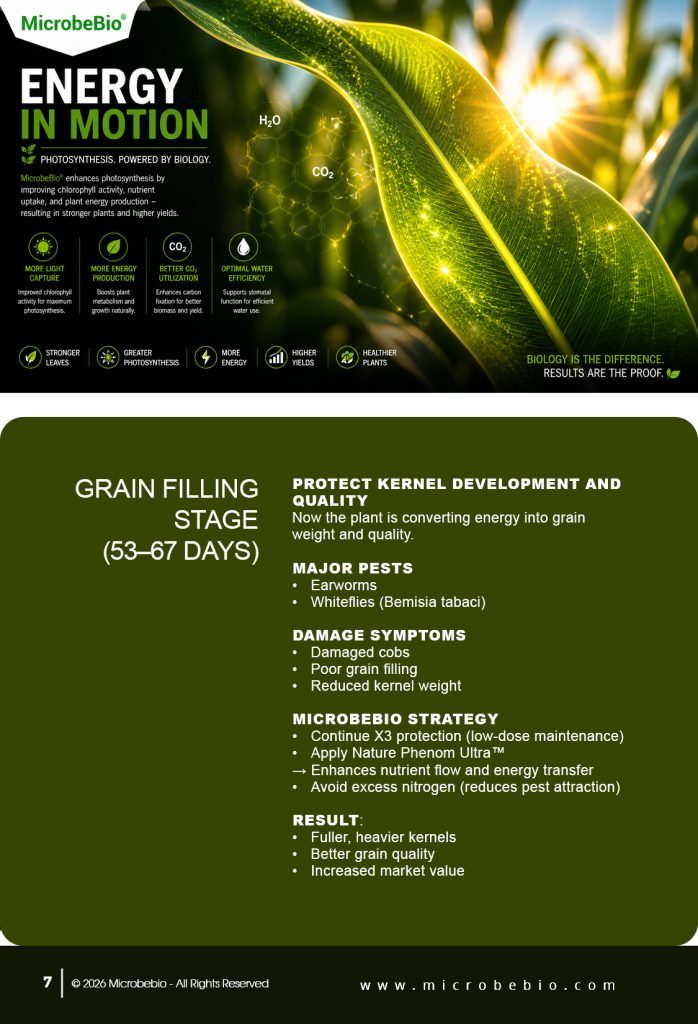
Now the plant is converting energy into grain weight and quality.
Major Pests
- Earworms
- Whiteflies (Bemisia tabaci)
Damage Symptoms
- Damaged cobs
- Poor grain filling
- Reduced kernel weight
Microbebio Strategy
- Continue X3 protection (low-dose maintenance)
- Apply Nature Phenom Ultra™
→ Enhances nutrient flow and energy transfer - Avoid excess nitrogen (reduces pest attraction)
Result:
- Fuller, heavier kernels
- Better grain quality
- Increased market value
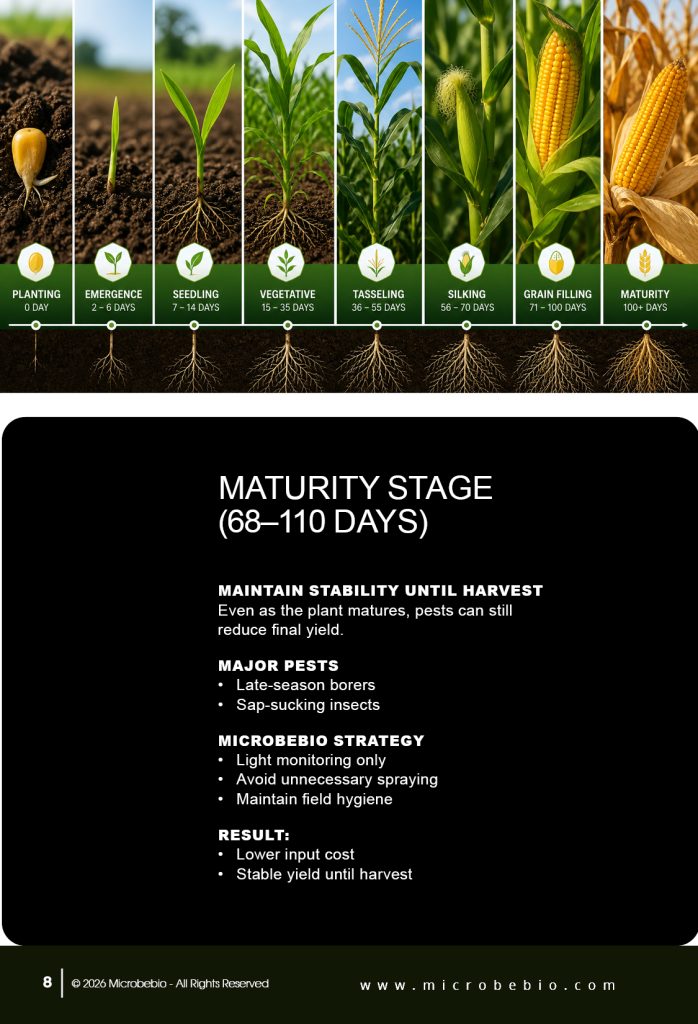
MATURITY STAGE (68–110 DAYS)
Maintain Stability Until Harvest
Even as the plant matures, pests can still reduce final yield.
Major Pests
- Late-season borers
- Sap-sucking insects
Microbebio Strategy
- Light monitoring only
- Avoid unnecessary spraying
- Maintain field hygiene
Result:
- Lower input cost
- Stable yield until harvest
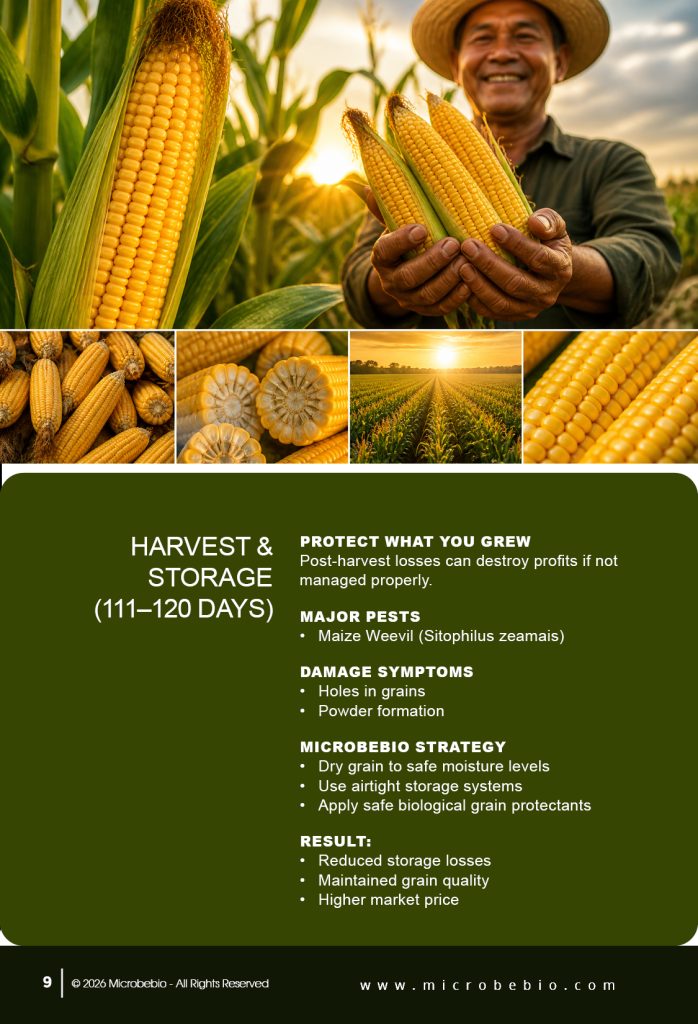
HARVEST & STORAGE (111–120 DAYS)
Protect What You Grew
Post-harvest losses can destroy profits if not managed properly.
Major Pests
Maize Weevil (Sitophilus zeamais)
Damage Symptoms
- Holes in grains
- Powder formation
Microbebio Strategy
- Dry grain to safe moisture levels
- Use airtight storage systems
- Apply safe biological grain protectants
Result:
- Reduced storage losses
- Maintained grain quality
- Higher market price
KEY TAKEAWAYS
- Pest control must match the growth stage
- Strong plants = natural resistance
- Early biological activation reduces later chemical use
- Integrated Pest Management (IPM) is the future
THE MICROBEBIO DIFFERENCE
- Most systems try to kill pests.
- Microbebio builds a system where:
Plants grow stronger than the pressure
Soil biology dominates the environment
Pests lose their advantage
Final Thought
“You don’t lose yield at harvest…
You lose it when the plant is unprotected.”
With Microbebio®, pest control becomes a system of growth, protection, and performance—at every stage of maize development.