A Scientific Approach to Sustainable Soil Fertility
Modern agriculture increasingly recognizes that soil is not simply a physical medium for plants but a living biochemical ecosystem. Within this ecosystem, billions of microorganisms—including bacteria, fungi, actinomycetes, and protozoa—interact continuously with plant roots and soil minerals to regulate nutrient availability and soil chemistry.
At the center of this biological engine is the rhizosphere, the thin zone of soil surrounding plant roots where microbial activity is most intense. When properly managed, microbial communities transform soil into a dynamic nutrient cycling system capable of improving fertility, plant health, and long-term sustainability.
Microbebio microbial technologies harness these natural biological processes to optimize soil chemistry, increase nutrient availability, and support resilient crop production systems. By introducing carefully selected beneficial microbes and supporting them with organic nutrients and trace minerals, Microbebio products help restore the natural biological balance of soils while enhancing plant productivity.
This article explores the scientific mechanisms through which Microbebio microbes improve soil chemistry, focusing on key microbial processes such as nitrogen fixation, phosphorus solubilization, enzyme production, organic matter formation, improved cation exchange capacity, and pH stabilization.
Soil Microbiology: The Foundation of Nutrient Cycling
Healthy soil can contain more than one billion microorganisms per gram, forming a highly complex biological network that regulates nutrient transformations.
Plants release root exudates, including sugars, amino acids, and organic acids, which attract beneficial microbes to the rhizosphere. In return, these microbes perform biochemical reactions that release essential nutrients and improve soil chemical properties.
Microbebio microbial formulations are designed to reinforce these natural soil processes, ensuring that microbial communities remain diverse, active, and beneficial for crop growth.
The result is a biologically active soil system that continuously regenerates fertility while reducing dependence on excessive chemical inputs.
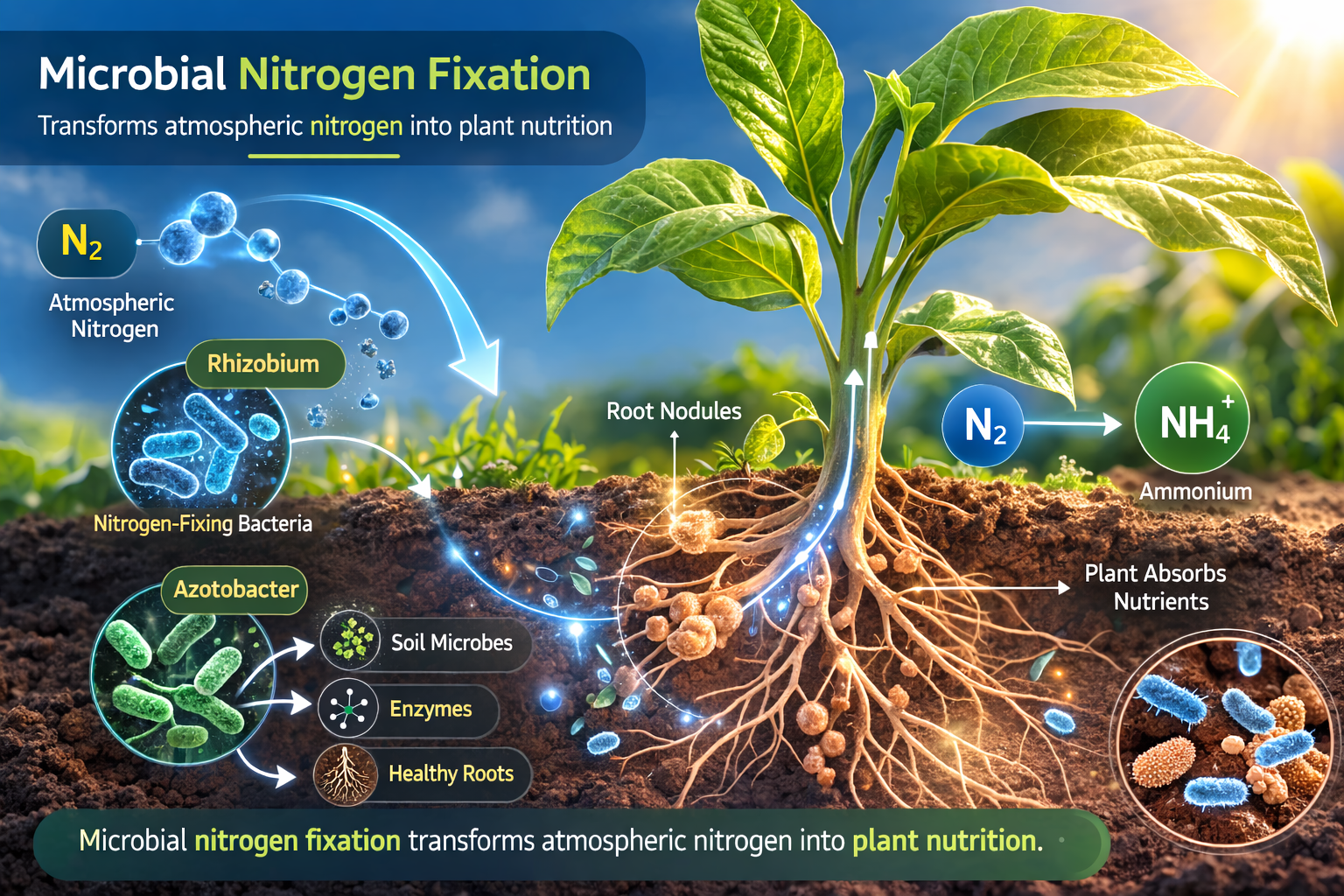
Nitrogen Fixation: Converting Atmospheric Nitrogen into Plant Nutrition
Nitrogen is one of the most essential nutrients for plant growth, yet approximately 78% of Earth’s atmosphere consists of nitrogen gas (N₂) that plants cannot directly use.
Beneficial microorganisms within Microbebio formulations support biological nitrogen fixation, a natural process where specialized bacteria convert atmospheric nitrogen into ammonium (NH₄⁺), a plant-available form.
These microbes possess the enzyme nitrogenase, which catalyzes the conversion of atmospheric nitrogen into biologically usable nitrogen compounds.
Key benefits include:
• Increased nitrogen availability in the soil
• Reduced reliance on synthetic nitrogen fertilizers
• Improved plant growth and leaf development
• Enhanced chlorophyll production and photosynthesis
By supporting nitrogen-fixing microbial communities, Microbebio solutions help establish a self-sustaining nitrogen cycle, ensuring crops receive a continuous and balanced nitrogen supply.
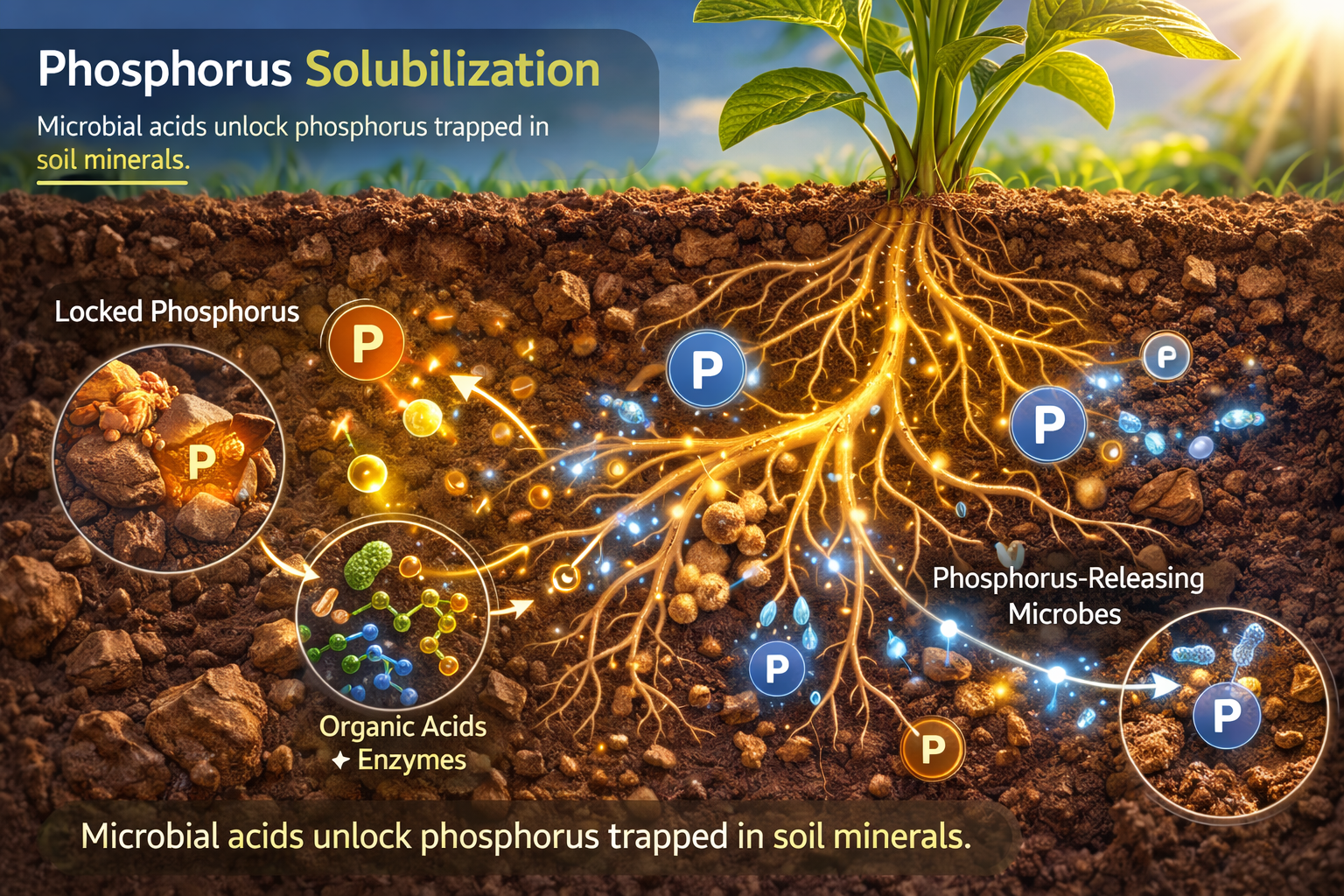
Phosphorus Solubilization: Unlocking Bound Soil Phosphorus
Phosphorus is essential for energy transfer, root development, and flowering, yet much of the phosphorus in soil exists in insoluble forms that plants cannot absorb.
Many soils contain large reserves of phosphorus bound to calcium, iron, or aluminum compounds. Without microbial activity, this phosphorus remains chemically locked and unavailable to crops.
Microbebio microbes include phosphate-solubilizing bacteria and fungi that release organic acids and enzymes capable of dissolving these mineral complexes.
Through microbial metabolism, insoluble phosphorus is converted into orthophosphate ions (PO₄³⁻) that plants can readily absorb.
Scientific benefits of phosphorus-solubilizing microbes include:
• Increased phosphorus availability in the rhizosphere
• Enhanced root development and early plant vigor
• Improved flowering and fruit formation
• More efficient use of applied phosphate fertilizers
This process allows farmers to maximize nutrient efficiency while reducing fertilizer waste and environmental runoff.
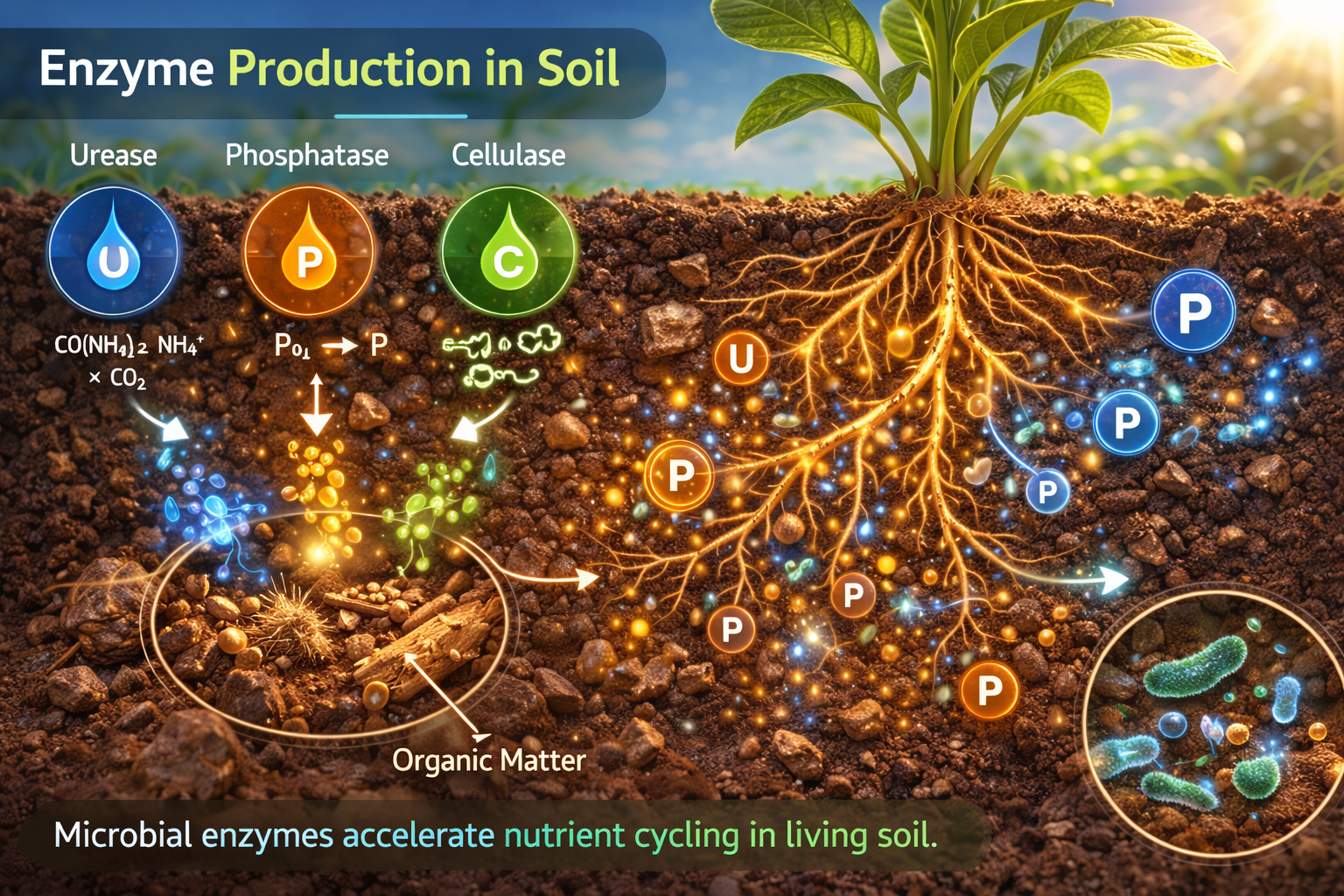
Enzyme Production: Accelerating Nutrient Cycling
Microbial communities function as biochemical factories that produce powerful enzymes responsible for nutrient transformations in soil.
Among the most important enzymes produced by Microbebio microbes are:
Urease
Urease converts urea fertilizers into ammonium, making nitrogen rapidly available to plants while reducing nitrogen losses.
Phosphatase
Phosphatase enzymes release phosphorus from organic matter and plant residues, further increasing plant-available phosphorus in soil.
Cellulase and Protease
These enzymes break down plant residues and organic materials into smaller molecules that microbes and plants can utilize.
Through enzymatic activity, Microbebio microbes significantly accelerate nutrient cycling, transforming organic and inorganic compounds into forms that plants can absorb efficiently.
This biological nutrient transformation enhances soil fertility while minimizing nutrient losses through leaching or volatilization.
Increasing Soil Organic Matter and Humus Formation
Soil organic matter is one of the most important indicators of soil health, fertility, and long-term productivity.
Microbebio microbes play a critical role in the decomposition of crop residues, organic fertilizers, and natural plant materials.
During decomposition, microbes convert complex organic molecules into stable humus, a dark, carbon-rich material that improves soil chemistry and structure.
Humus provides several chemical benefits:
• Increased soil carbon content
• Improved nutrient retention
• Enhanced microbial habitat
• Greater soil water-holding capacity
The accumulation of organic matter also contributes to carbon sequestration, helping agriculture play a role in climate mitigation.
Through continuous microbial activity, Microbebio formulations help transform soils into biologically enriched systems capable of sustaining long-term productivity.
Improved Cation Exchange Capacity (CEC)
Cation exchange capacity (CEC) refers to the soil’s ability to retain and exchange positively charged nutrient ions such as:
• Calcium (Ca²+)
• Magnesium (Mg²+)
• Potassium (K+)
• Ammonium (NH4+)
Soils with higher CEC can hold nutrients more effectively and release them gradually to plants, preventing nutrient losses.
Microbial activity contributes to higher CEC by:
• Increasing organic matter content
• Producing microbial biomass and humic substances
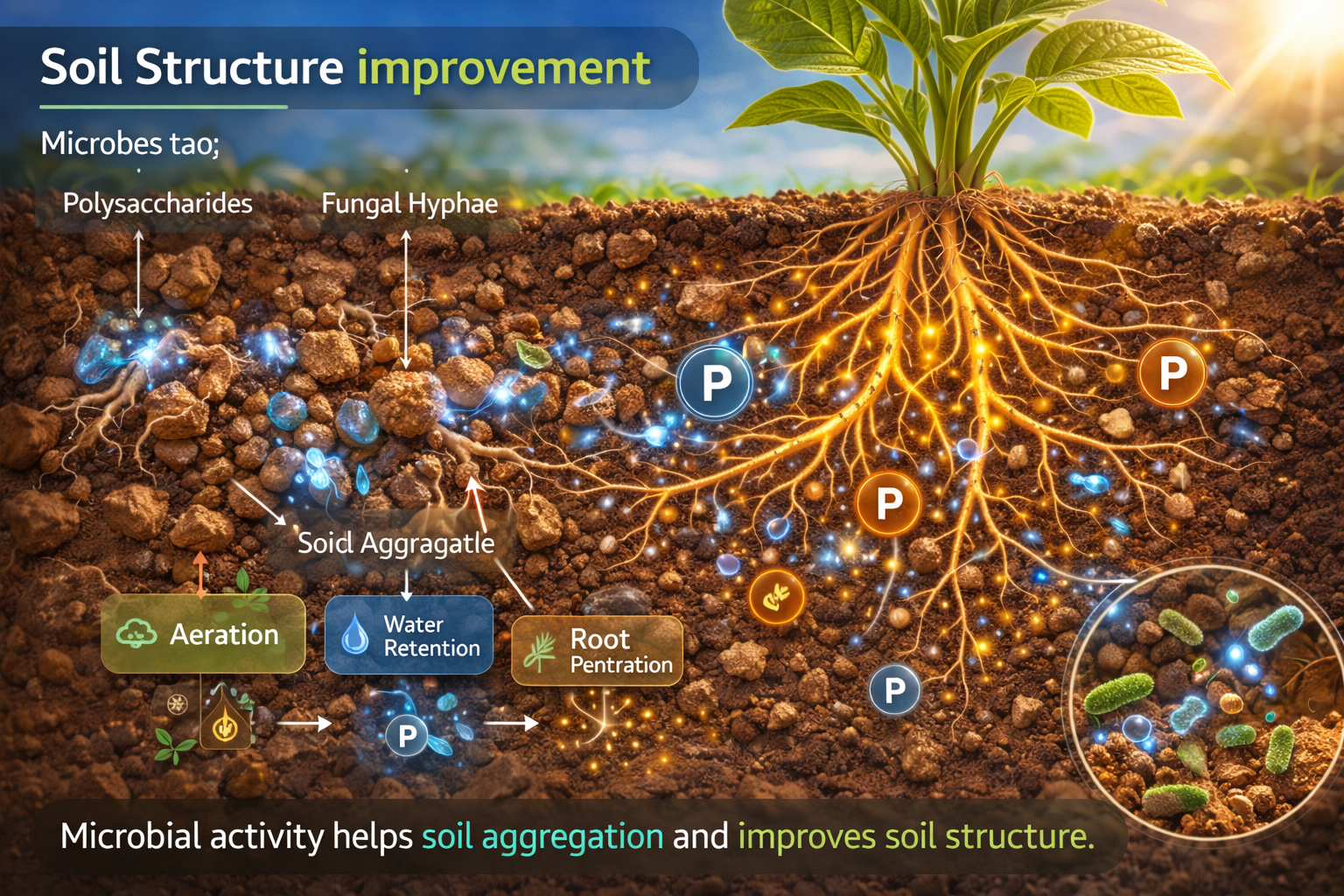
• Improving soil structure and aggregation
As microbial populations grow, they enhance the soil’s ability to retain essential nutrients within the root zone, improving fertilizer efficiency and plant nutrient uptake.
Balanced Soil pH and Chemical Stability
Soil pH strongly influences nutrient solubility and microbial activity. If soil becomes too acidic or too alkaline, many essential nutrients become unavailable to plants.
Beneficial microbes help stabilize soil chemistry by producing organic compounds that act as natural buffering agents.
Microbial metabolism can:
• Release organic acids that dissolve mineral nutrients
• Neutralize toxic compounds
• Balance soil alkalinity or acidity
The result is a more chemically stable soil environment, where nutrients remain available and plant roots can function optimally.
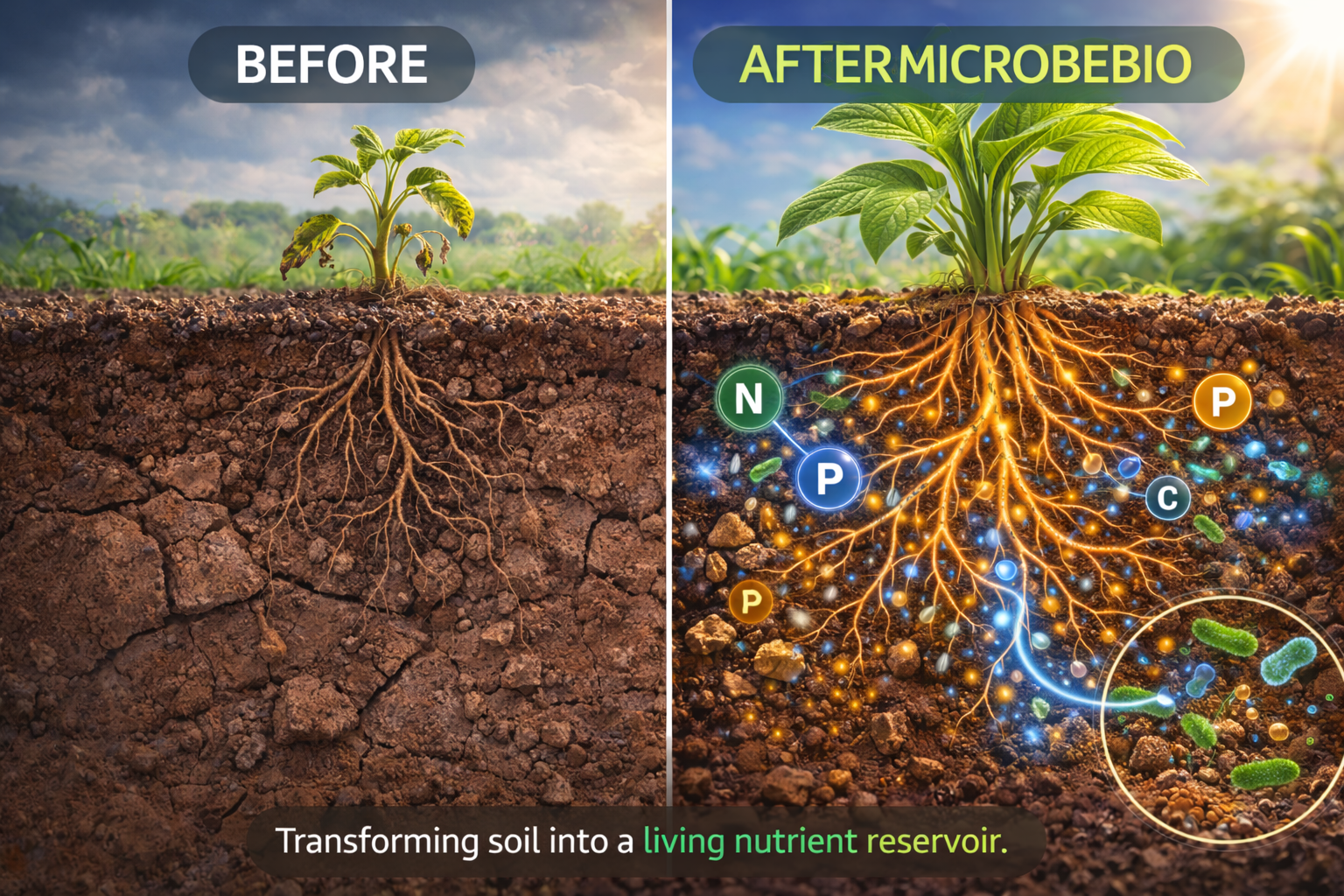
The Result: A Living Soil System for Sustainable Agriculture
The combined action of nitrogen fixation, phosphorus solubilization, enzyme production, organic matter formation, improved cation exchange capacity, and pH stabilization creates a powerful biological system that enhances soil fertility and plant productivity.
Microbebio microbial technologies transform soil into a living biochemical engine, where beneficial microbes continuously regenerate nutrient availability and strengthen the rhizosphere ecosystem.
Key outcomes include:
• Improved nutrient efficiency
• Enhanced soil fertility
• Stronger root development
• Higher crop yields and quality
• Reduced chemical fertilizer dependency
• Healthier soils for future generations
As agriculture moves toward more sustainable and regenerative practices, microbial soil solutions are becoming essential tools for improving soil chemistry and supporting resilient crop production systems worldwide.
Microbebio remains committed to advancing biological agriculture through innovative microbial science, helping farmers build healthier soils, stronger crops, and more sustainable food systems.