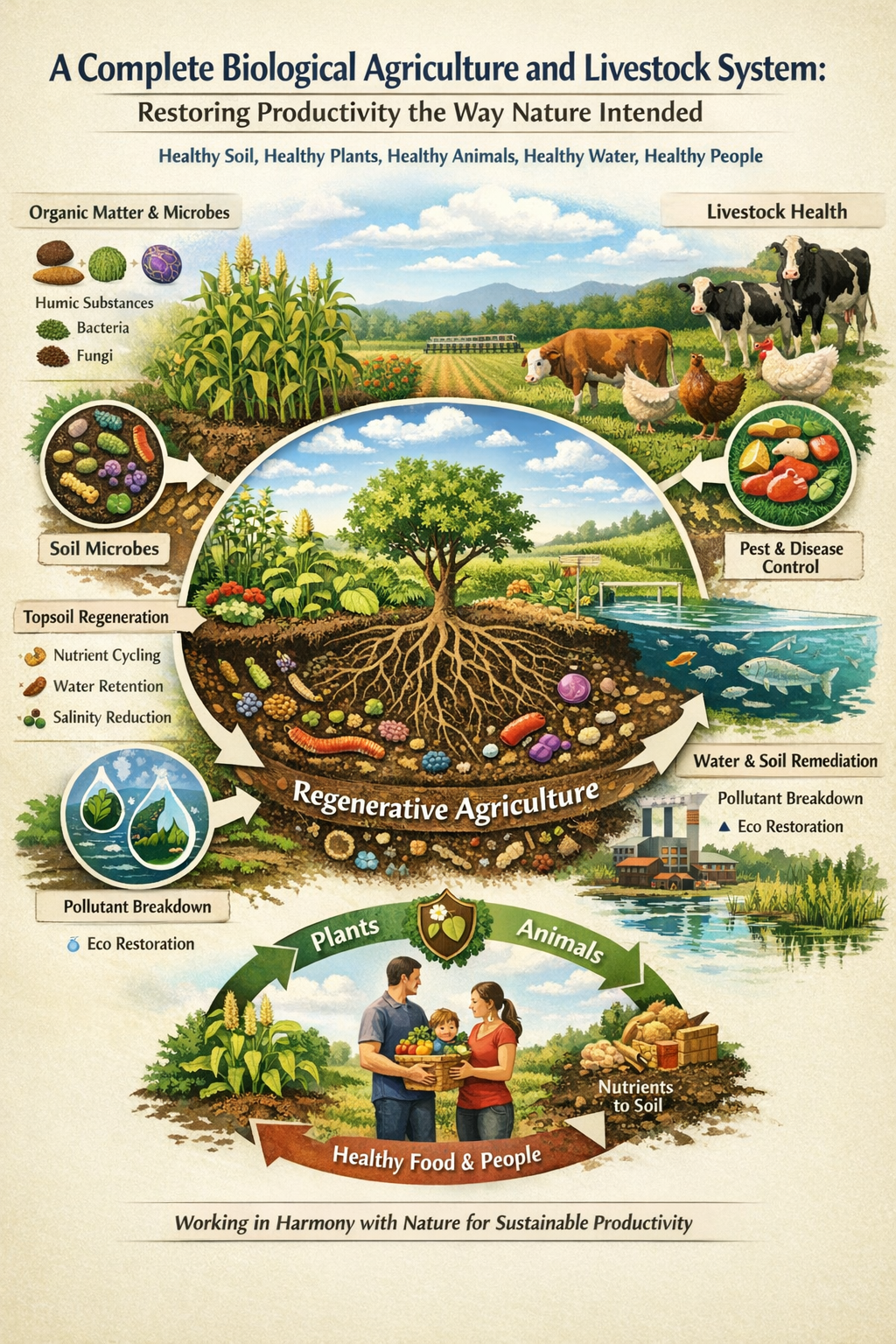
This platform represents a fully integrated biological system designed to support agriculture, livestock, aquaculture, and environmental health through natural, science-based processes. It is built on the principle that soil, plants, animals, water, and humans are interconnected, and that sustainable productivity comes from restoring and enhancing these biological relationships—not replacing them with synthetic inputs.
By combining beneficial microorganisms, organic nutrients, plant-derived compounds, and advanced delivery systems, this approach provides a low-cost, high-efficiency model that improves yield, quality, resilience, and long-term soil fertility.
1. Foundation: Biological Agriculture as a System
Modern agriculture has often separated crop production from soil biology and ecosystem health. This has led to:
-
Declining soil organic matter
-
Increased salinity and compaction
-
Reduced microbial diversity
-
Dependence on synthetic fertilizers and pesticides
-
Lower crop nutritional quality
This system reverses that trend by restoring:
-
Rhizosphere biology (root–microbe interactions)
-
Nutrient cycling (nitrogen, phosphorus, potassium, micronutrients)
-
Natural plant defense mechanisms
-
Soil structure and water retention
 The result is a self-reinforcing biological cycle, where soil health drives plant health, which supports animal and human health.
2. Topsoil Regeneration (Core of Productivity)
Topsoil is the most valuable asset in agriculture. Regeneration focuses on rebuilding its physical, chemical, and biological properties.
Key Mechanisms
A. Organic Matter Restoration
-
-
Incorporation of humic substances, seaweed extracts, and organic carbon sources
-
Increased cation exchange capacity (CEC)
-
Improved nutrient retention
-
B. Microbial Reinoculation
-
-
Introduction of beneficial bacteria and fungi:
-
Nitrogen-fixing bacteria
-
Phosphate-solubilizing microorganisms
-
Potassium-mobilizing organisms
-
Mycorrhizal fungi
-
-
These organisms convert unavailable nutrients into plant-available forms.C. Soil Structure Improvement
-
-
Aggregation of soil particles through microbial exudates
-
Reduction of compaction
-
Increased porosity and aeration
-
D. Salinity Reduction
-
-
Biological buffering of sodium ions
-
Improved drainage and ion exchange
-
Enhanced root tolerance to saline conditions
-
E. Water Retention & Efficiency
-
-
Increased organic matter improves water-holding capacity
-
Reduced irrigation requirements
-
Improved drought resilience
-
Outcome of Topsoil Regeneration
-
-
Stronger root systems
-
Higher nutrient uptake efficiency
-
Increased yield stability
-
Long-term sustainability of farmland
-
3. Plant Nutrition, Growth Regulation, and Quality Enhancement
Plant productivity is optimized through biological nutrient delivery and metabolic stimulation.
A. Macro and Micronutrient Optimization
-
-
Nitrogen fixation (biological conversion of atmospheric nitrogen)
-
Phosphorus solubilization (unlocking bound phosphates)
-
Potassium mobilization
-
Trace mineral availability (Fe, Zn, Mn, Cu)
-
B. Natural Plant Growth Regulation
-
-
Stimulation of phytohormones:
-
Auxins (root development)
-
Cytokinins (cell division)
-
Gibberellins (growth elongation)
-
-
Enhancement of plant signaling pathways
-
C. Chlorophyll & Photosynthesis Enhancement
-
-
Increased chlorophyll density
-
Improved light absorption efficiency
-
Higher photosynthetic rate
-
Leads to greater biomass and energy production.D. Crop Quality Improvement
This system is designed to maximize high-value crop characteristics:
-
-
Increased Brix levels (sugars and dissolved solids)
-
Enhanced terpene and essential oil production
-
Improved aroma and flavor intensity
-
Better color, texture, and visual appeal
-
Extended shelf life and post-harvest stability
-
E. Stress Tolerance
-
-
Improved resistance to:
-
Heat stress
-
Drought
-
Salinity
-
Oxidative stress
-
-
4. Crop Disease Control (Biological Defense Systems)
Crop protection is achieved through integrated biological mechanisms, rather than synthetic chemical dependence.
A. Modes of Action
1. Competitive Exclusion
Beneficial microbes colonize root and leaf surfaces, preventing pathogen establishment.
2. Antibiosis
Production of natural antimicrobial compounds that inhibit pathogens.
3. Induced Systemic Resistance (ISR)
Activation of plant immune systems to respond more rapidly and effectively.
4. Enzymatic Degradation
Breakdown of fungal cell walls and pathogen structures.
B. Major Crop Diseases Controlled
Rice
-
-
Rice blast (Magnaporthe oryzae)
-
Bacterial leaf blight (Xanthomonas oryzae)
-
Sheath blight (Rhizoctonia solani)
-
Tungro virus (complex viral disease)
-
Vegetables
-
-
Powdery mildew
-
Downy mildew
-
Fusarium wilt
-
Bacterial spot and blight
-
Damping-off
-
Fruit Trees
-
-
Anthracnose
-
Citrus greening (HLB – management support)
-
Root rot diseases
-
Leaf spot and blight
-
Corn (Maize)
-
-
Northern corn leaf blight
-
Southern rust
-
Smut (Ustilago maydis)
-
Stalk rot
-
5. Biological Pest Control (Target Pest Spectrum)
This system integrates microbial and botanical pest control mechanisms.
Rice Pests
-
-
Stem borers
-
Rice stink bugs (Oebalus spp.)
-
Brown planthopper
-
Leaf folders
-
Golden apple snail
-
Vegetable Pests
-
-
Aphids
-
Whiteflies
-
Thrips
-
Caterpillars (armyworms, loopers)
-
Spider mites
-
Fruit Tree Pests
-
-
Fruit borers
-
Scale insects
-
Mealybugs
-
Psyllids
-
Fruit flies
-
Corn Pests
-
-
Fall armyworm (Spodoptera frugiperda)
-
Corn borers
-
Rootworms
-
Cutworms
-
Mechanisms of Pest Control
-
-
Infection and mortality through entomopathogenic organisms
-
Feeding disruption
-
Repellency via plant-derived compounds
-
Interference with insect life cycles
-
6. Environmental Remediation (Soil and Water Recovery)
A critical component of this system is biological remediation of contaminated environments.
A. Chemical Residue Breakdown
-
-
Degradation of herbicides (e.g., glyphosate)
-
Reduction of pesticide residues
-
Detoxification of persistent organic pollutants
-
B. Industrial and Legacy Contamination
-
-
Microbial degradation of hydrocarbons
-
Reduction of dioxin-like compounds (complex, long-term process)
-
Heavy metal immobilization (bioavailability reduction)
-
C. Water Remediation
-
-
Reduction of ammonia, nitrites, and organic load
-
Improved dissolved oxygen balance
-
Stabilization of aquatic microbial ecosystems
-
D. Soil Detoxification Outcomes
-
-
Restoration of microbial diversity
-
Improved plant growth conditions
-
Reduced environmental toxicity
-
7. Livestock and Aquaculture Probiotics (Integrated Animal Health)
Biological systems extend to animal nutrition and health, creating a unified agricultural cycle.
Target Species
-
-
Poultry
-
Swine
-
Cattle (dairy and beef)
-
Fish and shrimp
-
Key Benefits
-
-
Improved gut microbiome balance
-
Enhanced digestion and nutrient absorption
-
Better feed conversion efficiency
-
Strengthened immune response
-
Reduced pathogen load
-
Impact
-
-
Lower feed costs
-
Reduced antibiotic dependency
-
Improved growth performance
-
Healthier animal production systems
-
8. Economic Efficiency: Low Cost, High Yield
This biological system is designed to be:
-
Cost-effective (reducing chemical inputs)
-
Scalable (adaptable across crops and regions)
-
High return on investment
Farmer Benefits
-
Increased yield per hectare
-
Higher crop quality and market value
-
Reduced input costs over time
-
Improved soil longevity
9. The Natural Cycle Restored
This platform aligns with how nature functions:
-
Soil microbes feed plants
-
Plants feed animals
-
Animals return nutrients to soil
-
Water systems remain balanced
By restoring this cycle, agriculture becomes:-
More productive
-
More resilient
-
More sustainable
Final Scientific Position
This system represents a next-generation biological agricultural model, integrating:
-
Soil regeneration
-
Plant nutrition and regulation
-
Disease and pest control
-
Environmental remediation
-
Livestock and aquaculture health
All working together in a closed-loop, biologically driven ecosystem.
Conclusion
When biological systems are restored and properly managed, agriculture performs the way nature intended—efficient, resilient, and capable of producing high yields with superior quality while protecting the environment and supporting long-term human and animal health.