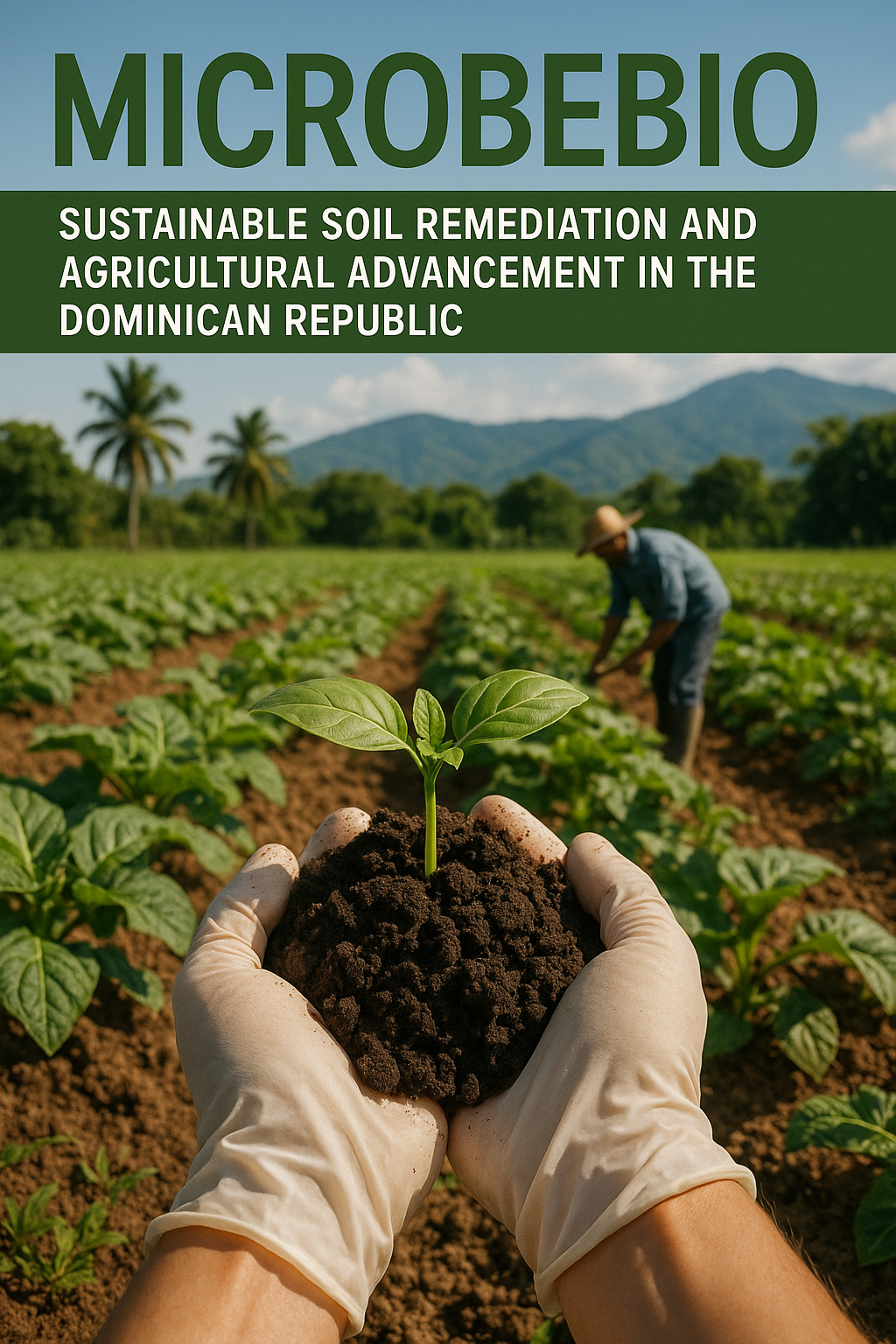
Microbebio: Sustainable Soil Remediation and Agricultural Advancement in the Dominican Republic
The Dominican Republic is facing critical soil challenges that threaten agricultural productivity and long-term soil health. A 2024 soil survey (kjssf.org) highlights key issues such as nutrient imbalances, heavy metal contamination, soil organic matter depletion, and heightened pest and disease pressure. Traditional chemical fertilizers offer only temporary relief and often accelerate soil degradation. Microbebio presents a sustainable, all-natural solution using proprietary microbes, mycorrhizae, and organic nutrient blends to transform soil health and safeguard agricultural productivity for future generations.
Key Soil Problems
-
Phosphorus Deficiency: Critical shortages impacting crop growth.
-
Magnesium & Potassium Deficiency: Insufficient levels required for healthy plant development.
-
Calcium Oversaturation: Impairs phosphorus and magnesium uptake.
-
Heavy Metal Contamination: Elevated chromium and nickel levels.
-
Low Organic Matter: Decreases soil fertility, water retention, and microbial activity.
-
Increased Pest and Disease Pressure: Frequent soil-borne fungal and pest infestations.
Microbebio Solutions
Proprietary Microbial Formulas
-
Phosphorus-solubilizing bacteria to free bound phosphorus.
-
Magnesium and potassium mobilizing microbes to correct deficiencies naturally.
-
Microbial strains that stabilize and immobilize heavy metals.
-
Beneficial microbes that produce antibiotics and enzymes to suppress pathogens.
Mycorrhizal Fungi
-
Arbuscular mycorrhizal fungi (e.g., Glomus spp., Rhizophagus irregularis) to:
-
Enhance phosphorus, magnesium, and potassium absorption.
-
Increase root surface area and disease resistance.
-
Block heavy metal uptake in plants.
-
Proprietary Organic Nutrients and Farm Waste Composting
-
Proprietary organic nutrient blends combined with microbes to compost farm waste effectively, transforming it into rich organic matter.
-
Accelerated composting through microbial decomposition that increases soil organic carbon and improves soil structure.
-
Organic compost reduces the need for synthetic fertilizers and boosts the soil’s natural nutrient cycling.
Microbial Biofilm Formation for Saline and Contaminated Soils
-
Microbebio’s proprietary microbes form biofilms that:
-
Remediate saline soils by enhancing ion balance and reducing sodium uptake.
-
Stabilize and immobilize heavy metals, reducing their bioavailability to crops.
-
Naturally balance soil pH through microbial-driven buffering processes.
-
Pest, Fungal, and Disease Control
-
Microbial competition and antibiotic production suppress harmful fungi and soil pathogens (e.g., Pyricularia oryzae, Rhizoctonia solani).
-
Mycorrhizal-induced systemic resistance strengthens plant immune responses.
-
Enhanced soil biodiversity limits pest populations and supports beneficial soil fauna.
Comparative Advantage Chart
|
Problem
|
Chemical Fertilizers
|
Microbebio Solutions
|
Benefits of Microbebio
|
|---|---|---|---|
|
Phosphorus Deficiency
|
Temporarily supplements P
|
Unlocks bound P through microbial solubilization
|
Sustainable P cycling, reduced fertilizer dependence
|
|
Magnesium & Potassium Def.
|
Adds Mg and K synthetically
|
Mobilizes native Mg and K, adds via organics
|
Long-lasting correction, improved soil balance
|
|
Calcium Oversaturation
|
Worsens imbalance
|
Buffers with biochar, balances cation ratios
|
Restores nutrient uptake efficiency
|
|
Heavy Metal Contamination
|
No solution, may increase mobility
|
Microbial immobilization, organic chelation
|
Reduces plant heavy metal absorption
|
|
Low Soil Organic Matter
|
Further depletes SOM
|
Restores SOM with compost and microbial activity
|
Improves structure, water retention, microbial life
|
|
Pest & Fungal Diseases
|
Requires chemical pesticides
|
Biological suppression via microbes and mycorrhizae
|
Natural, sustainable pest/disease control
|
|
Soil Degradation
|
Accelerates degradation
|
Rebuilds soil health and resilience
|
Preserves soil for future generations
|
|
Saline Soil
|
No solution
|
Microbial biofilms reduce sodium and remediate salts
|
Restores soil productivity, improves crop tolerance
|
|
pH Imbalance
|
No correction
|
Microbial buffering to balance soil pH
|
Supports optimal nutrient availability
|
Conclusion
Microbebio delivers an advanced, sustainable solution for the Dominican Republic’s soil challenges. By leveraging the power of proprietary microbes, mycorrhizae, organic nutrients, and farm waste composting, Microbebio addresses phosphorus deficiencies, rebalances essential nutrients, suppresses pests and diseases, and rehabilitates saline and heavy metal-contaminated soils. Our unique microbial biofilms not only remediate but also protect soils, ensuring long-term productivity. Unlike chemical fertilizers that strip the land and harm future potential, Microbebio nurtures and restores the soil, offering a legacy of healthier farms, stronger crops, and thriving ecosystems for generations to come.